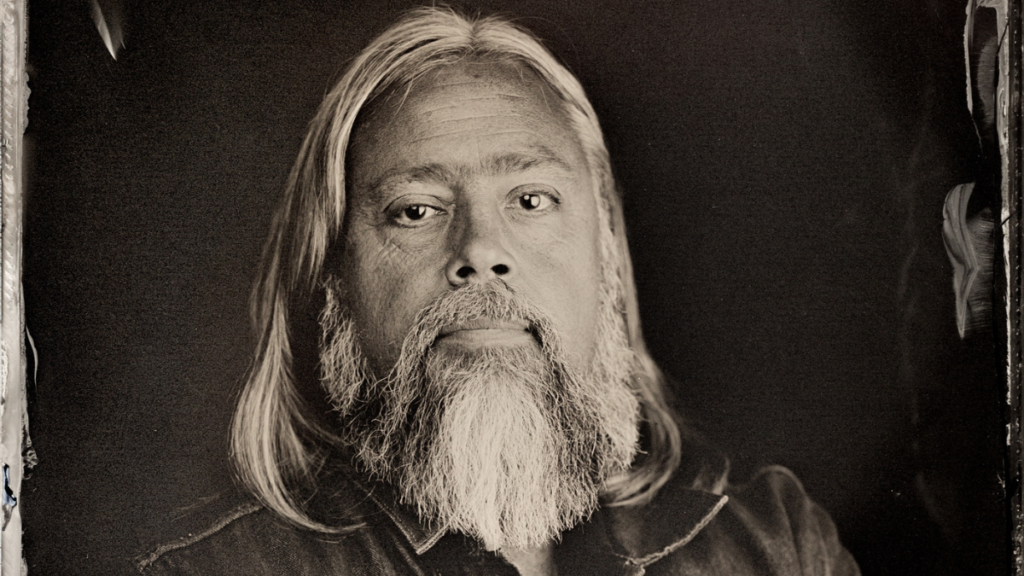


Trey Owens came into my life as he did so many others: a chance encounter followed by a run-in at a coffee shop, a pleasant exchange, and then quite suddenly, he held my rapt attention. Naturally charismatic, with quick wit and magnetic properties, Trey possessed a remarkable ability to quickly cut through social niceties to expose the heart of a conversation.
Trey was 17 when doctors identified a rare cancer eating away at the bones his left leg. Cancer’s continued presence in his body, despite extensive surgery and repeated chemotherapy, heightened Trey’s thirst for connections, his quest for knowledge and universal truth, and it accelerated his pace of life. Trey lived each day knowing he could die, not of old age with a lifetime well spent, but at a tragically early age.
In early February, I received a phone call. Trey’s voice on the other line was ragged, and he struggled to talk. He explained his cancer was spreading. It had grabbed at his core, wrapping around his trachea while expanding throughout his thoracic cavity, but he wasn’t going to do chemo. Not again. Not this time.
Trey knew his body better than any doctor or x-ray ever could. He was finely attuned to his internal structure and sought out literature on life and death, consuming vast amounts of theology to aid in understanding his shortened life cycle. “I know that a body in motion stays in motion,” he told me, “and that a body at rest stays at rest.” Trey had reached life’s finale, and he wanted to share his story.
Ron Schuster, accepting the Freeman Lacy Lifetime Achievement Award during the 2012 Magic City Music Awards.
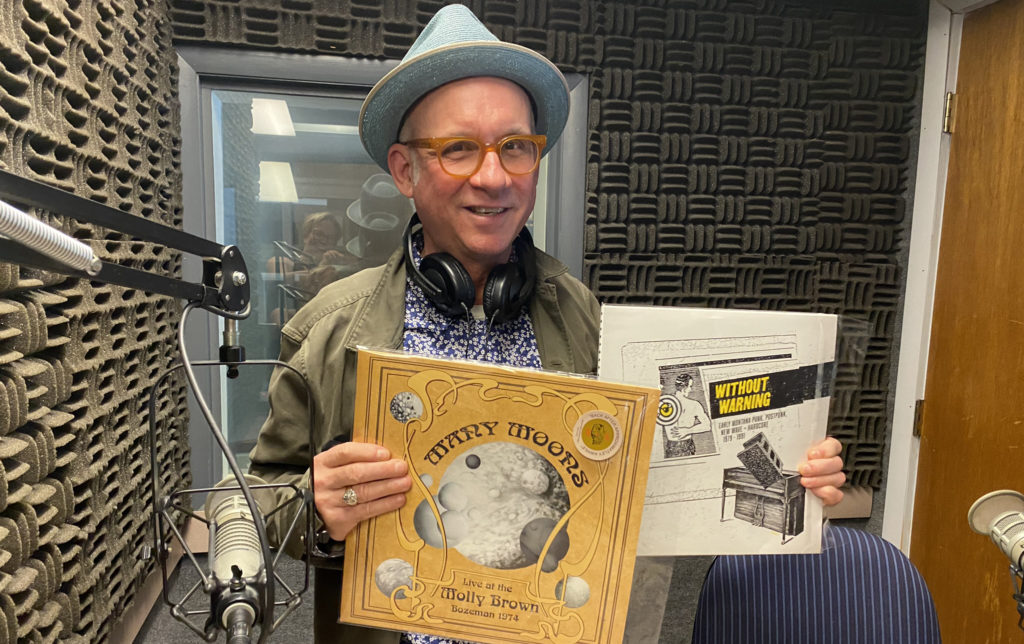
Ron Schuster could tell a thousand stories through vinyl. At one time he owned more than 5,000 records but has since paired his collection down to an essential 2,500 albums. Armloads at a time, Ron’s records overtook the house and slowly migrated to the garage. During a garage sale someone offered Ron $500 for the collection, lined alphabetically on handmade shelves.
“That’s not even a $1 per record!” Ron exclaimed. “Add another zero to that and maybe I’ll consider it.” The buyer left empty-handed.
Ron’s records may have been quarantined to the garage, but as I run my finger along the clear plastic sleeves, feeling the spines of the records, it’s obvious that this man’s record collection is invaluable. Ron has invited me to his home, nestled against Billings’ northern rimrocks, to eyeball his music collection, which includes thousands of CDs and bunches of cassettes recorded in the 70s and 80s. Ron’s music collection continues in a den-like area where he’s got two walls of CDs flanking a TV playing a live stream from a European music festival. Winn Butler of the Arcade Fire swings his head, throwing a sweaty Mohawk out of his face. I’m impressed—Ron knows the band, even has a favorite song: “Leave the Car Running.” These Canadian indie rockers aren‘t unknown, but they aren’t well known, either, especially to the baby boom generation.
I suppose I imagined Ron in his man-den spinning hit records from the 60s and 70s, not flipping music channels between Fatboy Slim and Arcade Fire. Ron was one of the first on-air programmers in the early 1970s at the fledgling Billings public radio station, KEMC, and he maintained a program on public radio for 30 years, which he recorded from his home. In the corner of Ron’s den, he still has an area set up for recording radio shows, though he’s been off the air for more than a year now. Hosting the program forced Ron to seek out new music on a weekly basis, from roots to rock to reggae music. In the heyday of radio, Ron received boxes of new music in the mail to sort through. He’d pick out the oddball artists that never made it big and give them some airtime.
Soul man
I’ve always been drawn to Ron. He’s an amenable guy, kindhearted and always in good sprits. He’s a man of quiet softness with peppered hair and warm eyes who married his high school sweetheart. He’s the kind of guy who lights up a room with a smile so genuine that you can’t help but smile back. Ron’s charisma is natural and his charms can sway a room, especially when he’s got a guitar in hand. Yet Ron’s hands haven’t held a guitar in months.
In 1999, Ron was diagnosed with prostate cancer. Despite undergoing removal of the prostate, Ron’s cancer continued to advance through his body, metastasizing into the bones of his back. “I had done really well up till then,” Ron says, “but I had a lot of back trouble to the point I couldn’t move.” A visit to the doctors, an injection of radioactive die, and an x-ray uncovered the cancer’s progression. “Boom. There it was in my back.”
That discovery in 2005 lead to treatments that left Ron with fatigue beyond anything he’s known before—something he equates to feeling like a limp noodle. “I just got so disinterested in playing the guitar. My whole focus has been trying to maintain. It’s hard to even explain. You think you know what tired is, but this fatigue was to the point where it was hard to throw the blanket off of you to get out of bed. And you don’t even want to. It was horrible. I was nauseated all the time, all day long.”
I first noticed Ron’s failing health during a “rent” party at Allied Music Studios—a monthly gathering in which attendees drop cash into an upside-down Djembe, get a dose of live music, and help sustain the studio where local musicians record and teach. Ron was wearing a colorful crochet beanie and a gigantic smile, even though he was struggling with losing clumps of his hair from chemotherapy. In the corner of the room Ron sat on a piano bench watching Dan Page—a Billings singer/songwriter Ron helped mentor along the way—strum original tunes on his guitar. In Ron’s face, thinned by the cancer drugs, there wasn’t a signal that cancer ravished his sprit, but rather that his cup was filled with the most exceptional memories, one he would continue adding to as long as he could.
Six months later I find myself surrounded by Ron’s musical collection having a glass of red wine and asking him about his musical past. His failing health lingers in the back of my mind, especially as he finds himself trying yet another chemotherapy to keep the cancer at bay. These pills, he tells me, come with a warning that women shouldn’t touch them. “And I’m putting that in my body. Makes you wonder,” he says. Yet through his stories, Ron comes alive.
Ron’s collection of music represents a lifetime of musical consumption. Ron cultivated his love of music in a record shop located in the old Hart-Albin Building. Spanning the corner of Broadway and Second Avenue North, the building was home to a sprawling four-story department store—the heart of retail in Billings from the early 1900s until its closure in the 1980s. In the basement, where hard goods and appliances were sold, was a section reserved for music.
“This area was just something they had because they sold record players,” Ron recalls, describing the space as a tiny square in a corner of the basement. In the 60s, Ron and his high school friends would paw through audio logs, ordering oddball music they read about in Rolling Stone or heard on the radio. At the time, these gigantic record catalogues were the only way for consumers and shops to track bands and their releases. Each month pages would arrive to add to the logs, chronicling the latest musical releases and billboard charts. Ron would later open his own record shop, employing some of his buddies. They’d sling records all day and jam music at night. So began a life’s work.
Ron cut his teeth on folk music, developing a love for the marriage of word and song at an early age. In his youth, Ron would listen to his father strum cowboy country songs on an acoustic guitar, which tweaked his interest in playing music. Ron was ten years old in 1959 when his parents divorced, and his father left the guitar behind. Ron would sit and play single string songs such as the theme to the Twilight Zone or the early 60s surf-rock song “Pipeline.” As he got older, he’d pluck at the guitar during parties, and he found the attention people paid to him alluring.
Ron started his first band, Poison Ivy, in high school. The group gigged at school and several teen clubs around town. This was the mid-60s, and rock and roll trends were moving to a more eclectic and electric form of rock. Eight-tracks were the latest thing, allowing music listeners to pick the music that they played, instead of hearing it on the radio. Ron recalls the shift: “You’d hear bands like Buffalo Springfield and the Moody Blues on the radio, but only one song. We’d go buy their album and drive around in a trance.” Music seemed to be what linked everyone together, and in Billings on the weekends Ron and his friends would listen to music in their cars and congregate at the clubs.
The summer of his junior year in high school, Ron dove into the hippie subculture after spending time with some progressive thinkers he met from Colorado, including the charismatic Mac King.
“Everybody wanted to do what Mac was doing,” Ron recalls. “He was a handsome, talented poet who wrote books and music and played guitar. I just thought that was so cool, so I tried to visit Mac in Colorado as much as possible. That is where I got turned onto the alternative lifestyle that became the hippie movement.”
Hanging with Mac, reading Aldous Huxley and listening to the Jim Kweskin Jug Band, Ron was exposed to advanced thinking and was listening to music he had no idea about. “I’d come back to Billings—this conservative, isolated little burg—and I knew I wanted more. I’d seen the other side of the fence and I wanted to get back there.”
After graduating high school in 1967, Ron traveled. He bummed around Europe, lived in England for a few months, and even took a Volkswagen with stick-on flowers on its sides to Mexico, where he and his comrades planned to bring back loads of marijuana to the states. They got sick on the food and decided Mexico was not the place for them, and they turned around. When Ron returned to Billings, he found that many of his graduating classmates had moved northwest to Seattle or into Colorado. Ron headed to Denver where he worked construction and bought a Martin guitar. The guitar sat untouched for more than a year, however, as Ron’s dry hands were constantly covered in open sores from working with concrete.
“It was quite a beautiful guitar that I loved to pieces, and in a desperate time I sold it for next to nothing. It still kills me.”
Ron returned to Billings in the late 60s, lonely, homesick and broke. Many of his graduating class who made the mass exodus had also returned—the familiarity of Billings pulling them home. Ron found himself back in Billings in the middle of the hippie movement and afraid to be drafted into the Vietnam War. His brother was a marine and had served in Vietnam, and Ron was drafted after returning to Billings.
“I declared myself a conscientious objector, which at the time, if you could prove it, meant you would be exempt from the draft. I took a battery of tests to prove I was against killing people, and I got a one-year psychological reprieve.” Ron headed back abroad to Europe shortly after, were he would receive no further draft calls.
Yet Billings continued to call Ron home, and he returned again, this time rekindling with two musical friends from high school—both named Bob Brown. Nicknamed “Carb,” one Bob currently resides in Billings, and the other Bob lives in Coeur D’Alene. These two men were instrumental in getting Ron back into playing guitar.
“We would get together in a basement and just thrash away,” Ron recalls. “We thought it was wonderful! Back then we were just exploring. We used to have so much fun, all plugged into this giant amplifier that had this horrible sound. I don’t know if we ever made sense or not, but it seemed like we actually played music.”
In the 70s Ron opened a Budget Tapes and Records, part of a chain of record stores based in Colorado. The store had couches for lounging and music mags for reading, incense was always burning and cool music was always playing. Here you could snag a t-shirt, drug supplies, and of course, records and tapes. Ron and both Bobs manned the record store. The Bobs lived together in an apartment behind the record store, and Ron was living on his own in a two-room house. They would come together in the evenings and jam.
From this basement thrashing, bands started to form. The musical melding of Ron and both Bobs became D’ Club La Peach, a name inspired by the Allman Brothers album, Eat a Peach. The group also included Joe Sullivan, Tom Brown, who was Carb’s brother from Casper, and Pat Rogers.
“In the record shop we were exposed to all this different music that you didn’t hear on the radio,” says Ron. “Everyone wanted to hear radio music like ‘Free Bird’ and (Lynyrd) Skynyrd—all those cliché things. We were playing stuff like Elvis Costello. We were playing stuff way ahead of its time, people just didn’t understand. Some of that music I still play today.”
D’ Club La Peach evolved across the years to many different bands, which would break up and form into another band. Ron joined the Neo Trio, started by Bob Brown with Tom Cockral (on keyboard) and Pat Rogers. With the addition of bass player Bruce Gagne, the group became a five-piece trio, which would eventually evolve into Dr. Pluto, remains of Neo Trio and the Southside Swing Band.
Ron sold the record store in the mid-80s to pursue music full-time, and he hit the road with Dr. Pluto.
“We played a week at a time—that’s what the tours were then: Tuesday through Saturday,” Ron explains. The group played across Montana and into Idaho, and attracted the attention of a Minneapolis-based booking agency called Good Music Productions.
“Just about that time, two of the guys decided they wanted to quit because they had gotten married, had house payments, and didn’t want to travel anymore. So that band blew up and died.” Naturally, Ron was disappointed. He had quit a good paying job and gave up interest in a record shop to pursue music full-time, and he had to start over.
Ron went on to play with Soul Brat in the mid 90s, a group whose music can best be described as party fuel. With bass smacking, conga thumping, reggae grooving, New Orleans-inspired funk, the music of Soul Brat always brought a good time. It was during this time with Soul Brat that Ron was diagnosed with cancer.
“I was out of commission for three months, and missed one gig for which they found a replacement guitarist. Soul Brat went on without me.” The group didn’t last long, however, as members scattered. Bob Brown moved to Coeur d’Alene, the charismatic lead singer and bassist Todd Eagle moved to Vermont for a short time, and the group struggled to stay together.
Ron is humble about his playing, even calling himself “adequate” at guitar work. “I recognize I’m limited in my talent but that doesn’t deter me in the fact that I love to play. At one point I thought I had to be fabulous, but as I grow older I’m happy just being adequate, it’s fun to play and know people appreciate it, to me that’s what it’s all about, playing with my friends is really what’s fun.”
Soul Brat in their performance at the 2010 Billings Outpost Tuney Awards.Ron, at right, performs with Soul Brat. Bassist Todd Eagle is seen at left, with Ernan Cortez on sax in the background.
Soul Brat rekindled in 2010, coming together to perform at the Billings Outpost Tuney Awards, an annual musical gathering that honors local music and musicians from the past year. Seeing the group come together after so many years was like being privy to one big, inside joke—one that you actually got.
“That’s how it was back then,” said founding member Harby Howell of the early days when he formed Soul Brat nearly 20 years ago. Reuniting with fellow founders Todd Eagle on bass and drummer Clay Green, Howell flew in from Texas for the occasion. Guitar in hand, Howell—who was all smiles—radiated joy onstage, no doubt reveling in the moment of gigging with the boys again. Todd, who possessed the energy of a teenager with a biting sense of humor to match, introduced members with wit and charm, mentioning by the time saxophonist Ernan Cortez joined up with the group “it all went to hell.” Eagle then turned the stage over to Schuster, describing him as “one of the sweetest, dearest, most talented people I’ve ever met.” Schuster, his eyes closed, looking thin in a white tee-shirt and jeans, seemed to reach deep within to summon his inner folk star and rolled out his raspy, soulful voice. “If I’m the brat,” Eagle said, “he’s the soul.”
At 63, Ron has carried cancer in his body for more than 13 years. Doctors say his cancer is not a curable disease, but it’s a manageable one. Ron coughs occasionally as we talk, and I’m not sure if the cancer is causing the rasp in his voice or if it’s his natural tone. He’s been through hell with these treatments, the latest being three rounds of experimental Leukapheresis procedures across a two-month period in early 2012. Hundreds of thousands of dollars later, Ron’s hair has returned and the gaunt and ghostly image he carried due to the cancer drugs is gone. The price tag is steep, but like Ron’s record collection, it’s impossible to put a price on a man’s life.
“I’m feeling good and like myself again,” Ron says. “I’ve been banging on the guitar a bit, and my interest is back. I want to get out and do some playing. I’m getting old; I want to get it out before I can’t.”
Since this piece was written, Ron has returned to his guitar playing under the moniker Schuster, and was honored at the 2012 Magic City Music Awards for his lifetime achievements in music and his endearing presence in the Billings music scene.
As I drop down Interstate 90 into the river valley that holds the “Magic City,” I swear: I won’t ever live in Billings, Montana. The sun glints off a sprawling refinery that dominates the city’s eastern entrance. A sickly sweet smell smacks my face, making my teeth ache and my stomach curl. They’re processing sugar beets on the south side, an area as close to an inner-city ghetto as a Montana town can get. Somewhere in this landlocked dustbowl are 100,000 people sprawling west along the Yellowstone River, which winds across the city’s southern belly. Yet all I see as I enter the city are neon signs shouting “liquor” and “casino” amongst the transients curled in doorways. Downtown morphs from a gritty scene to a workingman’s paradise. Bank buildings dominate the landscape and hospitals stretch across the land like arteries, overtaking historic neighborhoods in the city’s core. Surely this “magic” city has been misnamed.
I’m like any other Wyoming resident—I’ve come for the shopping Wyoming just can’t provide and Billings’ lack of a sales tax. On a good day, and with this tax avoided, I’ve paid my way. With my car stocked and the refineries in my rearview mirror, I’m confident. I will never live in Billings, Montana.
Yet in the months that follow, as I plow my way through the doldrums of living in a small Wyoming town without much opportunity, Billings beckons me. It’s small enough for a small town girl to feel at home, yet big enough and far enough away from Wyoming to feel like something progressive could actually happen. It’s also far enough from home that my parents couldn’t just drop by, yet close enough that they could plan a weekend visit. Plus, Billings has job opportunities that Wyoming just can’t match.
I find myself dropping back into the city in which I swore I’d never reside with a U-Haul full of my belongings. I figure my journalism degree and background in newspaper and photography work will land me a dream job as a reporter or photographer at the largest newspaper in the state, The Billings Gazette. Seven interviews for seven different positions later, I’m in the least glamorous position possible: night-side paginator. Once again, I question the “magic.”
Yellowstone River from the top of Pompey’s Pillar looking west. MHS Photograph Archives, Helena
It was through the explorations of W. Milnor Roberts, a chief engineer for the Northern Pacific Railroad, that Billings came to be. As Roberts and his crew rode toward the site of present-day Billings, Roberts observed: “We have passed through the finest valley by far that I have seen in Montana” (Lubetkin 2002). Railroad financier Frederick H. Billings founded the city in 1882 and it quickly became a booming railroad town, hence the “Magic City” nickname. From its speedy beginnings, Billings has continued to boom, reaching a population milestone of 100,000 residents in 2006—the only city in Montana to do so (Kemmick 2006). I figure with all these sprawling urbanites, there must be some culturally enlightened folks. Even in Casper, the small Wyoming town where I grew up, there were pockets of culture—small clubs where the sweatiest punk rock music you could imagine rolled through town.
My life has always centered on music, from the early years of sneaking listens to Pink Floyd’s The Wall (my mother found it inappropriate music for children; my father was thrilled I took an interest in music of his generation) to my symphonic music pursuits to my teenage days of foul-mouthed punk rock. I was a symphony in the flautist by day, an elbow thrower in the mosh pits by night, attending concerts in divvy warehouse venues in Casper. When I started college at the University of Wyoming in Laramie I dropped the flute and picked up the bass when I formed a band with my roommate. I screamed, she sang and played guitar. All our songs were three chords. Our favorite compliment: we were a “cuter Bikini Kill” (Besides Green Day, which my roommate listened to incessantly, Kathleen Hanna and her Riot Grrrl movement was our inspiration).
Eighthundred Reasons
In the tiny town of Laramie, Wyoming, we fought to bring musicians through town. This was the late 90s and the early 2000s, when the Internet was just developing into a tool for traveling bands. Musicians still relied heavily on word-of-mouth and moved from city to city based on the good word of other traveling bands. Details in publications such as Book Your Own Fucking Life let this traveling network know where there would be food and gas money. In Laramie, we handmade flyers for shows and taped them to poles. We held concerts in garages that the police shut down and in warehouses that the fire department condemned. Bands slept on our floor, and we fed them ramen noodles and drank Pabst Blue Ribbon until the sun came up. It was during this time that I worked as entertainment editor for the college newspaper while pursuing my journalism degree. Music was everywhere; music was my life.
Sarah Stoli and her Beers.
The shift out of college into working life was a shock for me. My roommate joined another band—Stoli and the Beers, named after her favorite vodka. I went to intern at a newspaper in Sheridan, Wyoming. She toured the country in a van with smelly boys and I worked just about every day of the week as the paper’s only photographer for a disgustingly small salary. I’d be ambulance chasing one minute, photographing high school football the next. I was even sent to an accident outside of town involving a cow. Within the six-month mark I felt that I knew everyone in town, or at least everyone knew me. The chemistry in Sheridan was strange. It was a small western town that attracted rich residents who built sprawling McMansions for vacation homes, yet it was a poor city in many aspects without well-paying job opportunities. Poverty was high, drugs were easy to find, and life was tough if you weren’t independently wealthy.
Though I left Wyoming for opportunity (and to get the hell out of Sheridan), in Billings I begin to feel disconnected from music. I’m building ads and classified sections, and there is not a smidge of writing or photography opportunities in sight. Night after night, paper after paper, and I’m stagnant. I’m withering away in this “magic” city.
So begins my musical quest. I take a review of a Bright Eyes album to the entertainment section’s editor, and he likes it. He asks if I’ve got more. I start writing album reviews, requesting advanced copies of my favorite artists. Suddenly pagination has meaning, as it led me to my savior—published articles with my byline.
I learn to overlook the oil fields flanking the city’s east and west entrances for the sandstone rimrocks that surround the northern edge of the city. The smell of burning sugar beets becomes the sweet fragrance of home and the deafening rumble of bike gangs a sweet reminder that summer is near. I smile at the homeless and ignore the casinos, and when a catastrophic oil spill mars the expansive banks of the Yellowstone River, it becomes a price we pay for living with refineries. I’m not even upset when our gas prices are higher than Wyoming’s—despite the fact that we produce and export the stuff! I treasure spring rain when it comes for the smell it leaves on dirty asphalt, and I cherish the fires of a Montana sunset after a blistering summer day that make a cold microbrew taste better than I could have imagined.
Rim walking.
A few years in the “Magic City” and I begin to take note of the sweet and welcoming sounds of bluegrass drifting out open doors in the summertime. I start gathering with collections of musicians on patios at downtown locales—the upright bass providing a beacon and reassurance that music is not far. At the local alehouses where brews are handcrafted, I’m sure to hear music pouring from doors amid the din of Montana Avenue traffic. Open mic jams also provide me reassurance that live music in Billings is a constant pursuit—each open mic revealing yet another budding talent. As temperatures steadily drop, inside the tiniest tavern a band will be set up in the corner, rolling through a sweaty set of jazz grooves and demonstrating they could care less about the weather.
My writing explodes. I’ve been given access to music in a new and exciting way. I have countless moments of musical intensity, festivity, and joy. The musicians of Billings show me that the term “family” is broader than the intended definition. They support and mentor one another, often sharing instruments and the stage. The musical families in town rear their youth in a culture that has inspired the youngest amongst us to pick up guitars, take their voices to the stage, and start their own bands. I’m in through the backdoor, the one that reveals what happens behind the scenes. I spend time with local musicians, prodding them for their stories, finding the angle that will propel readers to come to their shows. I interview traveling bands via phone, working up previews to entice readers to come to the concerts. This time the venues are legal, yet the crowds are small, the musicians are poor, and it becomes increasingly difficult to predict what concerts will pack the house and what concerts will leave the promoter holding the bag.
Western expanse.
In conversations, I gather that no one really knows why they stay in Billings. The city has always been perceived to be the “butt hole” of Montana, as a friend and local musician Ron Schuster once told me. To outsiders, our music isn’t cool enough, our restaurants aren’t hip enough, our people aren’t liberal enough, our concerts are the leftovers from other big markets—yet this is a false perception. Billings is what we continue to make of it.
Located on a rolling prairie 600 miles from any city of substantial size, Billings is isolated, shut off from the trends and cultures that sweep big cities. Those of us that value cultural qualities in our town continue to fight for them—even if it appears outwardly that the town’s residents don’t support it. In the coming years Billings could be the city we imagine it to be… the western hub, the must-stop location for bands and artists that we currently drive hundreds of miles to see….
Billings isolation may be the key to its magical properties, as the music that evolves here is distinctly original, inspired, and created from a sense of urgency. Billings is a big city with a small town mentality, yet it’s on the cusp of greatness. I just feel it. Those of us who choose to stay fight for a cultural scene that this city can’t create on its own. That’s why I stay. I want to be part of the story, not just read about it someday.